Summary

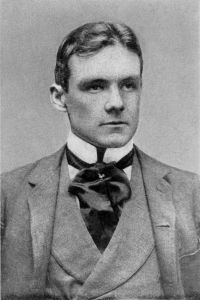
Portrait of Richard Harding Davis Richard Harding Davis Gallegher and Other Stories — A Walk Up the Avenue (1891)

He was walking quickly with rapt interest in this idea of abnegation when he noticed, unconsciously at first and then with a start, the familiar outlines and colors of her brougham drawn up in the drive not twenty yards from their old meeting-place. He could not be mistaken; he knew the horses well enough, and there was old Wallis on the box and young Wallis on the path.
He stopped breathlessly, and then tipped on cautiously, keeping the encircling line of bushes between him and the carriage. And then he saw through the leaves that there was some one in the place, and that it was she.
Source: Wikisource

Portrait of Richard Harding Davis Richard Harding Davis Gallegher and Other Stories — A Walk Up the Avenue (1891)

Yes, that was decidedly the best thing to do. To go away and improve himself, and study up all those painters and cathedrals with which she was so hopelessly conversant.
He remembered how out of it she had once made him feel, and how secretly he had admired her when she had referred to a modern painting as looking like those in the long gallery of the Louvre. He thought he knew all about the Louvre, but he would go over again and locate that long gallery, and become able to talk to her understandingly about it.
Source: Wikisource

Portrait of Richard Harding Davis Richard Harding Davis Gallegher and Other Stories — A Walk Up the Avenue (1891)

Then he dashed the bushes aside with both arms, and with a cry that no one but she heard sprang toward her.
Young Van Bibber stopped his mail phaeton in front of the club, and went inside to recuperate, and told how he had seen them driving home through the Park in her brougham and unchaperoned.
“Which I call very bad form,” said the punctilious Van Bibber, “even though they are engaged.”
Source: Wikisource

Get perspective with Kwize: daily news enlightened by great literature