Summary

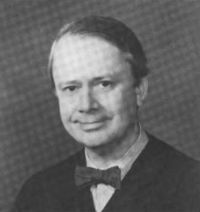
Portrait of Richard S. Arnold Richard S. Arnold Lacks v. Ferguson Reorganized School Dist… (1998)

Allowing one student to call another a "fucking bitch" and a "whore" in front of the rest of the class, and allowing a student to read aloud a poem that describes sexual encounters in the most graphic detail, as the students did in Lacks's classroom, hardly promotes these shared social standards. We consider the matter too plain for argument.
As a matter of law, the school board had the right to establish and require the enforcement of a rule which prohibits classroom profanity in any context, and it provided Lacks with enough notice of its disciplinary policies.
Source: Wikisource

Portrait of Richard S. Arnold Richard S. Arnold Lacks v. Ferguson Reorganized School Dist… (1998)

While students in public schools do not "shed their constitutional rights to freedom of speech or expression at the schoolhouse gate," Tinker v. Des Moines Independent Community School District, 393 U.S. 503, 506, 21 L. Ed. 2d 731, 89 S.C.t. 733 (1969) , students' First Amendment rights "in schools and classrooms must be balanced against the society's countervailing interest in teaching students the boundaries of socially appropriate behavior."
Source: Wikisource

Portrait of Richard S. Arnold Richard S. Arnold Lacks v. Ferguson Reorganized School Dist… (1998)

Moreover, having race on one's mind is not the same thing as acting because of race. At any rate, the single reference in the school board's press release is not sufficient to sustain the jury verdict on the race discrimination claims. Because Lacks has produced insufficient evidence that the school board's decision to terminate her was motivated by [p726] race, the judgment in Lacks's favor on her race discrimination claims cannot stand. On this record, the inference that the school board acted because of Lacks's race is wholly unreasonable.
Source: Wikisource

Get perspective with Kwize: daily news enlightened by great literature