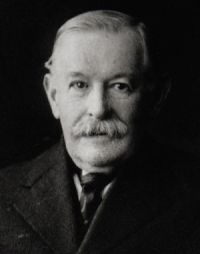
Robert Alexander Stewart Macalister

Robert Alexander Stewart Macalister

Summary

Portrait of Robert Alexander Stewart Macalister Robert Alexander Stewart Macalister 1911 Encyclopædia Britannica, Volume 12… (1911)

The great mass of the Gilead range is formed of Jura limestone, the base slopes being sandstone partly covered by white marls. The eastern slopes are comparatively bare of trees; but the western are well supplied with oak, terebinth and pine. The pastures are everywhere luxuriant, and the wooded heights and winding glens, in which the tangled shrubbery is here and there broken up by open glades and flat meadows of green turf, exhibit a beauty of vegetation such as is hardly to be seen in any other district of Palestine.
Source: Wikisource

Portrait of Robert Alexander Stewart Macalister Robert Alexander Stewart Macalister 1911 Encyclopædia Britannica, Volume 12… (1911)

As the eastern frontier of Palestine, Gilead bore the first brunt of Syrian and Assyrian attacks.
After the close of the Old Testament history the word Gilead seldom occurs. It seems to have soon passed out of use as a precise geographical designation; for though occasionally mentioned by Apocryphal writers, by Josephus, and by Eusebius, the allusions are all vague, and show that those who made them had no definite knowledge of Gilead proper. In Josephus and the New Testament the name Peraea or πέραν τοῦ Ἰορδάνου is most frequently used
Source: Wikisource

Portrait of Robert Alexander Stewart Macalister Robert Alexander Stewart Macalister 1911 Encyclopædia Britannica, Volume 12… (1911)

Excluding the narrow strip of low-lying plain along the Jordan, it has an average elevation of 2500 ft. above the Mediterranean; but, as seen from the west, the relative height is very much increased by the depression of the Jordan valley. The range from the same point of view presents a singularly uniform outline, having the appearance of an unbroken wall; in reality, however, it is traversed by a number of deep ravines (wadis) , of which the most important are the Yābis, the Ajlūn, the Rājib, the Zerka (Jabbok) , the Hesban, and the Zerka Ma’īn.
Source: Wikisource

Get perspective with Kwize: daily news enlightened by great literature