Summary

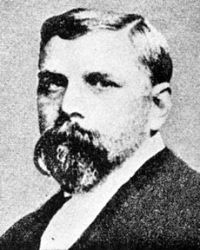
Portrait of Robert Barr Robert Barr The Face and the Mask — XIX. STRIKING BACK (1894)

Streeter resolved to strike back with something more tangible than a sarcastic verse. He quite admitted, even to himself, that a critic had every right to criticise—that was what he was for—but he claimed that a man who pretended to be an author's friend and who praised his books to his face, had no right to go behind his back and pen a criticism so scathing as that which appeared in the Argus: for Streeter knew that Alfred Davison had written the criticism in the Argus, and Davison had posed as his friend; and had pretended as well, that he had a great admiration for Streeter's books.
Source: Wikisource

Portrait of Robert Barr Robert Barr The Face and the Mask — XIX. STRIKING BACK (1894)

Miss Neville was young and pretty, and she was evidently pleased to meet the rising young author.
"I have long wanted to see you," she said, "to have a talk with you about your books."
"You are very kind," said Streeter, "but perhaps we might choose something more profitable to talk about?"
"I am not so sure of that. Doubtless you have been accustomed to hear only the nice things people say about you. That is the misfortune of many authors."
"It is a misfortune," answered Streeter. "What a writer needs is somebody to tell him the truth."
Source: Wikisource

Portrait of Robert Barr Robert Barr The Face and the Mask — XIX. STRIKING BACK (1894)

The review of his book in the Argus was vigorously severe, and perhaps what maddened him more than anything else was the fact that, in spite of his self-esteem he realized the truth of the criticism. If his books had been less successful, or if he had been newer as an author, he might possibly have set himself out to profit by the keen thrusts given him by the Argus.
Source: Wikisource

Get perspective with Kwize: daily news enlightened by great literature