Summary

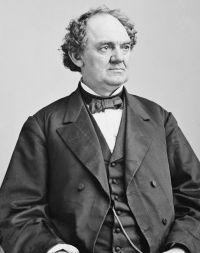
Portrait of P. T. Barnum P. T. Barnum The Humbugs of the World — Chapter XLIX (1866)

Now-a-days nobody believes that skill with a pistol is going to be specially bestowed by the Almighty, without diligent practice at a mark. Accordingly, the idea of a divine interposition has long ago dropped out of the question, and duelling is exclusively in the hands of the devil and his human votaries,—is a purely brutal absurdity. But in England, so long was this bloody, superstitious humbug kept up, that any hardened scoundrel who was a good hand at his weapon might, down to the year 1819, absolutely have committed murder under the protection of English law.
Source: Wikisource

Portrait of P. T. Barnum P. T. Barnum The Humbugs of the World — Chapter XLIX (1866)

No priests could do any thing with the wrath of two great mad ugly brutes, hot to kill each other, and crazy to risk having their own throats cut or skulls cleft rather than not have the chance. In consequence, the whole influence of the Romish church went against the ordeal by battle, and in favor of the others. Thus the former soon lost its religious element and became the mere duel; a base indulgence of a beast’s passion for murder and revenge. The progress of enlightenment gradually pushed ordeals out of court. Mobs have however always tried the ordeal by water on witches.
Source: Wikisource

Portrait of P. T. Barnum P. T. Barnum The Humbugs of the World — Chapter XLIX (1866)

Blackstone says that an ordeal might always be tried by attorney. I should think this would give the legal profession a very lively time whenever the courts were chiefly using tigers, poison, drowning, fire and red hot iron, but not so much so when a little swearing or eating was the only thing required.
This whole business of ordeals is a singular superstition, and the extent of its employment shows how ready the human race is to believe that God is constantly influencing even their ordinary private affairs.
Source: Wikisource

Get perspective with Kwize: daily news enlightened by great literature