Summary

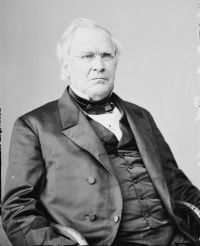
Portrait of Robert Cooper Grier Robert Cooper Grier New York v. Dibble — Opinion of the Court

The only question which this court can be called on to decide is, whether this law is in conflict with the Constitution of the United States, or any treaty or act of Congress, and whether this proceeding under it has deprived the relators of property or rights secured to them by any treaty or act of Congress.
The statute in question is a police regulation for the protection of the Indians from intrusion of the white people, and to preserve the peace. It is the dictate of a prudent and just policy.
Source: Wikisource

Portrait of Robert Cooper Grier Robert Cooper Grier New York v. Dibble — Opinion of the Court

Blacksmith, (19 Howard, 366,) that this treaty has made no provision as to the mode or manner in which the removal of the Indians or the surrender of their reservations was to take place; that it can be carried into execution only by the authority or power of the Government which was a party to it. The Indians are to be removed to their new homes by their guardians, the United States, and cannot be expelled by irregular force or violence of the individuals who claim to have purchased their lands, nor even by the intervention of the courts of justice.
Source: Wikisource

Portrait of Robert Cooper Grier Robert Cooper Grier New York v. Dibble — Opinion of the Court

So far as the statute of New York is concerned, it only requires that the Indians be in possession; they are not bound to show that they are owners. They may invoke the aid of the statute against all white intruders, so long as they remain in the peaceable possession of their lands.
The relators cannot claim the protection of the treaty, unless they have a right of entry given them by it, before the Indians are removed by the Government.
Source: Wikisource

Get perspective with Kwize: daily news enlightened by great literature