Summary

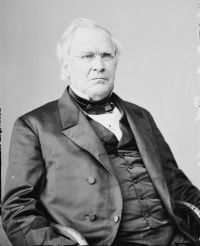
Portrait of Robert Cooper Grier Robert Cooper Grier Sturgis v. Clough (62 U.S. 451…

The master of the Hector acted on the supposition that the Mabey, according to custom, would round to, and could not anticipate that, contrary to all rule, she would run into the Hector, as she lay nearly at rest, lapping on the stern of the brig, when a single turn of her wheel, with her great headway, would have run her entirely clear of any danger of collision.
Source: Wikisource

Portrait of Robert Cooper Grier Robert Cooper Grier Sturgis v. Clough (62 U.S. 451…

The Mabey, which was coming down in the opposite direction, ought to round to, either to windward or leeward, so as to head the same way as the brig. Had these well-known rules been observed, no collision would have occurred in consequence of the race for precedence.
Cases may occur in which two steamboats engaged in unlawful racing may recklessly or wilfully dash against each other; and the courts, treating them both as criminals, may refuse to sustain an action or decide which was most to blame, leaving each to suffer the consequences of his own folly and recklessness.
Source: Wikisource

Portrait of Robert Cooper Grier Robert Cooper Grier Sturgis v. Clough (62 U.S. 451…

The testimony of the pilot of the Mabey, in fact, confirms this view of the case, and shows the collision to have been occasioned entirely by his own fault, or that of the master, who directed him. He says, 'My instruction was to run close to the brig's stern.' The master says, 'He expected the Hector would get out of his way;' and the pilot says, 'I supposed she would go on the other quarter, or else steer outside of me.' In other words, he proceeded in a direction which he knew must produce a collision unless the Hector would get out of his way.
Source: Wikisource

Get perspective with Kwize: daily news enlightened by great literature