Summary

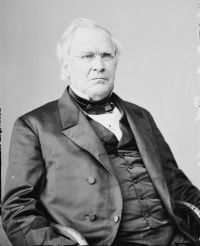
Portrait of Robert Cooper Grier Robert Cooper Grier United States v. Neleigh — Opinion of the Court

The declaration of the witness, that he should nevertheless as soon make a grant to Castro as to any other, is no doubt true, if it refers to the true date of the transaction, after they had both been superseded and deposed by the Americans. Nor does it add anything to the value of this testimony, that the witness explains that, by want of recollection, he means his unwillingness to state the truth.
Source: Wikisource

Portrait of Robert Cooper Grier Robert Cooper Grier United States v. Neleigh — Opinion of the Court

It would be superfluous to repeat the principles laid down in the Castro case. It is sufficient to say, that the additional testimony in this case does not relieve it from its deficiencies there stated. The testimony of Colonel Fremont of having seen some paper concerning a grant to Castro, does not prove the existence of this grant, which was not the only property claimed by Castro in California. The testimony of the late Governor adds nothing to the evidence. He, as usual, acknowledges the genuineness of his signature, which was not disputed
Source: Wikisource

Portrait of Robert Cooper Grier Robert Cooper Grier United States v. Neleigh — Opinion of the Court

These espedientes are all found safe among the records, but the 'toma de razon,' or short record of them, has disappeared. Hence, when a grant is produced for the first time from the pocket of the claimant, and is attempted to be established by proof of the signatures of the Governor and Secretary, the want of an espediente or archive evidence is expected to be excused by the proof that some papers were lost and torn when they were carried away on mules by Col. Fremont, or used 'as cartridge paper,' according to Pio Pico's theory.
Source: Wikisource

Get perspective with Kwize: daily news enlightened by great literature