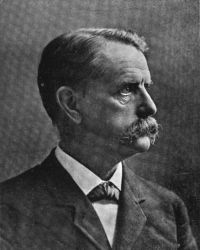
Robert Garlick Hill Kean

Robert Garlick Hill Kean

Summary

Portrait of Robert Garlick Hill Kean Robert Garlick Hill Kean Southern Historical Society Papers (1876)

And I feel a conviction that the truth will one day be vindicated; that, having reference to relative resources, Federal prisoners were more humanely dealt with in Confederate hands than Confederate prisoners were in Federal hands. It was their interest, on a cold-blooded calculation, to stop exchanges when they did it—and as soon as it was their interest, they did it without scruple or mercy. The responsibility of the lives lost at Andersonville rests, since July, 1864, on General Meredith, Commissary-General of Prisoners, and (chiefly) on Edwin M. Stanton, Secretary of War.
Source: Wikisource

Portrait of Robert Garlick Hill Kean Robert Garlick Hill Kean Southern Historical Society Papers (1876)

Seddon sent Captain Philip Welford, a gentleman of great intelligence, to Washington to see what was best to be done to protect her helpless husband, who was being prosecuted while a prisoner six hundred miles away. The result of Captain Welford's investigations and conferences with friends in Washington, was that it was not deemed judicious for Mr. Seddon to be represented directly by counsel, but that he should place his materials of defence and explanation touching the Chandler report in the hands of Wirz's counsel
Source: Wikisource

Portrait of Robert Garlick Hill Kean Robert Garlick Hill Kean Southern Historical Society Papers (1876)

I have at this late day no means of refreshing my memory in regard to the general orders on the subject of prison treatment, but this as a general fact I do know, that Mr. Davis' humanity was considered to be a stronger sentiment with him than public justice, and it was a common remark that no soldier capitally convicted was ever executed, if the President reviewed the record of his conviction.
Source: Wikisource

Get perspective with Kwize: daily news enlightened by great literature