Summary

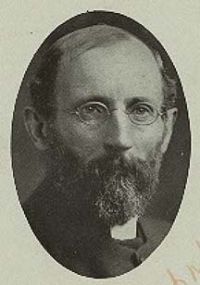
Portrait of Robert Henry Charles Robert Henry Charles 1911 Encyclopædia Britannica, Volume 23… (1911)

The vision of the Almighty is full of majesty and peace. All things do Him service; for all are the free creation of His will. The next vision serves to connect the Source and Sustainer of all things with the World and its history. The closing of the intermediate stage of the history of created things is committed to the Christ who will also be Lord of the age to come. The future of the saints is assured: what can avail against Him that hath “glory and dominion for ever and ever” the wild attacks of Rome and even of Satan and his hosts?
Source: Wikisource

Portrait of Robert Henry Charles Robert Henry Charles 1911 Encyclopædia Britannica, Volume 23… (1911)

If the writer of the Fourth Gospel was the Apostle John, then the difficulties for the assumption of an apostolic authorship of the Apocalypse become well-nigh insuperable. Nay more, the difficulties attending on the assumption of a common authorship of the Gospel and Apocalypse, independently of the question of the apostolic authorship of the Gospel, are practically insuperable.
Source: Wikisource

Portrait of Robert Henry Charles Robert Henry Charles 1911 Encyclopædia Britannica, Volume 23… (1911)

Before Him all the elders and the living creatures fell down and acknowledged that He had power to open the seven seals thereof, and their song was re-echoed by every thing alike in heaven and earth. The contrast between these two chapters and those that follow is striking in the extreme. The time of the seer's vision is one of direst need. The life and death struggle between the church and the empire has now entered on its final stage, and fear and trouble and woe are rife in the hearts of the faithful. But when the seer is exalted to heaven he sees no trace of the turmoil on earth.
Source: Wikisource

Get perspective with Kwize: daily news enlightened by great literature