Summary

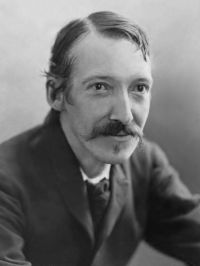
Portrait of Robert Louis Stevenson Robert Louis Stevenson The Annotated 'Travels with a Donkey in the Cévennes'…

My soul is like a garden full of shelter and of fountains.’ [18]
At Pont de Montvert, on the 12th of August, he had his right hand stricken from his body, and was burned alive. And his soul was like a garden? So perhaps was the soul of Du Chayla, the Christian martyr. And perhaps if you could read in my soul, or I could read in yours, our own composure might seem little less surprising.
Source: Wikisource

Portrait of Robert Louis Stevenson Robert Louis Stevenson The Annotated 'Travels with a Donkey in the Cévennes'…

The next night, 24th July 1702, a sound disturbed the Inspector of Missions as he sat in his prison-house at Pont de Montvert: the voices of many men upraised in psalmody drew nearer and nearer through the town. It was ten at night; he had his court about him, priests, soldiers, and servants, to the number of twelve or fifteen; and now dreading the insolence of a conventicle below his very windows, he ordered forth his soldiers to report. But the psalm-singers were already at his door, fifty strong, led by the inspired Séguier, and breathing death.
Source: Wikisource

Portrait of Robert Louis Stevenson Robert Louis Stevenson The Annotated 'Travels with a Donkey in the Cévennes'…

Pont de Montvert, or Greenhill Bridge, as we might say at home, [4] is a place memorable in the story of the Camisards. It was here that the war broke out; here that those southern Covenanters slew their Archbishop Sharp. [5] The persecution on the one hand, the febrile enthusiasm on the other, are almost equally difficult to understand in these quiet modern days, and with our easy modern beliefs and disbeliefs. The Protestants were one and all beside their right minds with zeal and sorrow.
Source: Wikisource

Get perspective with Kwize: daily news enlightened by great literature