Summary

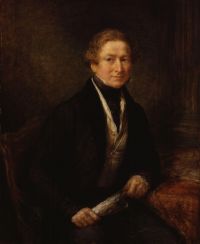
Portrait of Robert Peel Robert Peel Belgium and payments to Russia (1832)

If it were true that the original payment to Russia was made on account of services rendered to the general cause of Europe and sacrifices made by Russia, why did the second convention allege that the equivalent which England was to receive from Russia in return for the continued payments was this, that Russia would not contract any new engagement respecting Belgium, without a previous agreement with His Britannic Majesty, and his formal assent?
Source: Wikisource

Portrait of Robert Peel Robert Peel Belgium and payments to Russia (1832)

But England had the colonies, and to what Power then, according to the reasoning of the hon. member, ought England to make the payment of her portion of the loan? Surely to Holland. It might be very convenient, for ensuring Russian acquiescence, to make the payment to Russia, but certainly, according to the reasoning of the hon. member, it was anything but just. But he never would admit that Holland had behaved with harshness or injustice to Belgium, or that the revolt was justifiable by the conduct of Holland. The revolution in Belgium followed as a consequence from the revolution in France.
Source: Wikisource

Portrait of Robert Peel Robert Peel Belgium and payments to Russia (1832)

It had been stated that thousands of children had been torn from their parents, and banished into Siberia; he had expressed his disbelief of that assertion, and he had since been informed, on good authority, that those children were orphans—made orphans, he regretted to say, by the calamities of war—and that they had been placed in Russian schools, not for the purpose of separating them from their parents, for they had none, but for the purpose of providing for them in their helplessness, and giving them education.
Source: Wikisource

Get perspective with Kwize: daily news enlightened by great literature