Summary

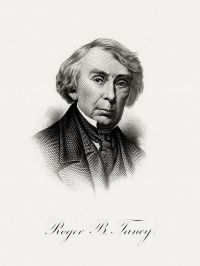
Portrait of Roger B. Taney Roger B. Taney Peck v. Sanderson (58 U.S. 178…

And if it was impossible to avoid the schooner, by changing the course of his vessel, the order to back was evidently judicious, as it gave more space for the schooner to change her course, and thereby escape the impending danger. Her course could be changed in a much shorter space than that required for a steam-ship of the size of The Columbus.
It is, without doubt, the general rule, that a sailing vessel should keep her course when approaching a steamboat, and it is the duty of the latter to keep out of her way.
Source: Wikisource

Portrait of Roger B. Taney Roger B. Taney Peck v. Sanderson (58 U.S. 178…

For it is impossible that a vessel, lighted up like the steamer, would not have been seen from the schooner before she actually came in collision, if there had been ordinary care and watchfulness on board. It may indeed have happened that Brown, who went forward as the look-out, fell overboard by some accident, without the knowledge of Burgess, before The Columbus was in sight; and so, the want of a look-out might have been occasioned by misfortune, and not by carelessness.
Source: Wikisource

Portrait of Roger B. Taney Roger B. Taney Peck v. Sanderson (58 U.S. 178…

The distance must depend on the state of the atmosphere, and vary with it. And no one can know or form a safe opinion as to the distance at which the schooner might have been seen, on the night of which we are speaking, unless he was at the place of collision at the time it happened, or derives his knowledge from persons who were there. And when the witnesses on board The Columbus testify that she could not be seen further off, there is no reasonable ground for doubting the truth of their testimony. It is a fact, proved by eye-witnesses, whose testimony is not impeached.
Source: Wikisource

Get perspective with Kwize: daily news enlightened by great literature