Summary

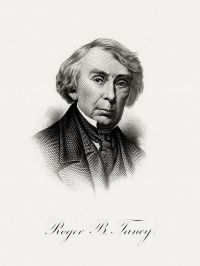
Portrait of Roger B. Taney Roger B. Taney United States v. Breitling — Opinion of the Court

It is clearly error in a court to charge a jury upon a supposed or conjectural state of facts, of which no evidence has been offered. The instruction presupposes that there is some evidence before the jury which they may think sufficient to establish the facts hypothetically assumed in the opinion of the court; and if there is no evidence which they have a right to consider, then the charge does not aid them in coming to correct conclusions, but its tendency is to embarrass and mislead them.
Source: Wikisource

Portrait of Roger B. Taney Roger B. Taney United States v. Breitling — Opinion of the Court

But the answer to this objection is, that the statute of Alabama, and the regulation it prescribes to the courts of the State, can have no influence on the practice of a court of the United States, unless adopted by a rule of the court. And it is always in the power of the court to suspend its own rules, or to except a particular case from its operation, whenever the purposes of justice require it.
Source: Wikisource

Portrait of Roger B. Taney Roger B. Taney United States v. Breitling — Opinion of the Court

In proceeding to examine the points raised upon it and argued in this court, it is not necessary to state at large the testimony given by the witnesses for the defendant, nor the grounds upon which the United States objects to the admissibility of the evidence; for it does not appear that the plaintiff excepted to any one of the decisions of the court overruling his objections. The exception states that he made the objections which have been argued here, and that the court overruled them.
Source: Wikisource

Get perspective with Kwize: daily news enlightened by great literature