Summary

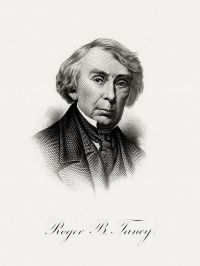
Portrait of Roger B. Taney Roger B. Taney Campbell v. Boyreau — Opinion of the Court

And by the established and familiar rules and principles which govern common-law proceedings, no question of the law can be reviewed and re-examined in an appellate court upon writ of error, (except only where it arises upon the process, pleadings, or judgment, in the cause,) unless the facts are found by a jury, by a general or special verdict, or are admitted by the parties, upon a case stated in the nature of a special verdict stating the facts, and referring the questions of law to the court.
Source: Wikisource

Portrait of Roger B. Taney Roger B. Taney Campbell v. Boyreau — Opinion of the Court

The act of Congress of May 26, 1824, (4 Stat., 62,) adopted the practice of the State courts in the courts of the United States. And a writ of error to a Circuit Court of that State, therefore, is governed by different principles from a like writ to the Circuit Court of any other State. And as, by the laws of Louisiana, the facts, by consent of parties, may be tried and found by the court without the intervention of a jury, this court is bound, upon a writ of error, to regard them as judicially determined, and treat them as if they had been found by the special verdict
Source: Wikisource

Get perspective with Kwize: daily news enlightened by great literature