Summary

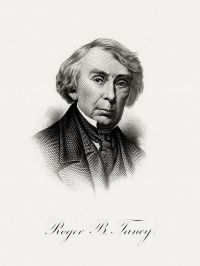
Portrait of Roger B. Taney Roger B. Taney United States v. Wilkinson — Opinion of the Court

And where no such fact appears, it must be presumed not to exist. A contrary rule would make the right to except of no value to the party, and would put an end to the revisory power of the appellate court whenever the inferior tribunal desired to exclude it-'De non apparentibus et de non existentibus eadem est ratio,' is an old and well-established maxim in legal proceedings, and is founded on principles of justice as well as of law. And for error in rejecting the testimony which upon the facts in the exception ought to have been received, the judgment of the Circuit Court must be reversed.
Source: Wikisource

Portrait of Roger B. Taney Roger B. Taney United States v. Wilkinson — Opinion of the Court

The exception in substance states that the District attorney offered to read in evidence a certain instrument, annexed to the petition, being an authentic copy of a bond signed by the defendants as sureties for McQueen. It is admitted by the answers, that the defendants had signed the original bond of which this is a copy: and moreover, the copy offered is said to be authentic. The possession of the original bond by the proper officers of the United States, was prima facie evidence that it had been delivered and accepted.
Source: Wikisource

Portrait of Roger B. Taney Roger B. Taney United States v. Wilkinson — Opinion of the Court

In the case last cited the bill of exceptions was taken to the offering in evidence of a promissory note, the ground being stated in the bill to be 'a very material variance between the note offered in evidence and that described in petition.' The court refused to examine the bill of exceptions because it did not set forth in what the variance consisted, although both the note and petition were copied into the transcript.
Source: Wikisource

Get perspective with Kwize: daily news enlightened by great literature