Summary

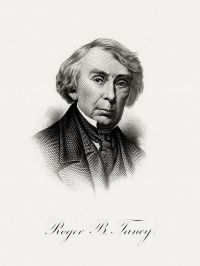
Portrait of Roger B. Taney Roger B. Taney Vincennes University v. Indiana…

It is sufficient to state under what circumstances the title, in the eye of the law, is said to be in abeyance. And Comyns, in his Digest, tells us, that 'when the fee or freehold of the land is not vested in any one, but stands solely in consideration of law, it is said to be in abeyance, or in nubibus.'
I cannot regard the title to lands reserved from sale by Congress, for the purposes of education, as standing in this condition. A reservation is not a grant.
Source: Wikisource

Portrait of Roger B. Taney Roger B. Taney Vincennes University v. Indiana…

And in deciding the question, this court treated the acts of Congress granting the land to the State, and also the law of the State appointing the Commissioners, as valid and constitutional; and it is not suggested, in the opinion, that the inhabitants of the township had a legal title to the school section, or any right to appoint Commissioners to control and administer the fund, unless authorized to do so by a law of the State. In the case before us, therefore, if the act of 1816 does not vest the title in the State, it still remains in the United States, and not in the trustees.
Source: Wikisource

Get perspective with Kwize: daily news enlightened by great literature