Summary

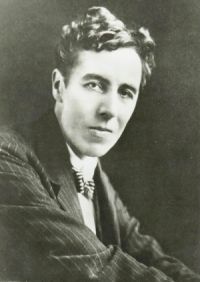
Portrait of Ronald Firbank Ronald Firbank The Flower Beneath the Foot

Every time she used her whip the powder rose in clouds. Wending her way through the throng the duchess recognised the rose-harnessed horses of Countess Medusa Rappa—the Countess bolt upright, her head carried stiffly staring with a pathetic expression of dead joie-de-vie between her coachman’s and footman’s waists. But the intention of calling at the Café Cleopatra caused the duchess to hasten. The possibility of learning something beneficial to herself was a lure not to be resisted.
Source: Gutenberg

Portrait of Ronald Firbank Ronald Firbank The Flower Beneath the Foot

Beneath a changing tide of deepening shadow, the lifeless valleys were mirroring to the lake the sombreness of dusk. Across the blue forlornness of the water, a swan, here and there, appeared quite violet, while coiffed in swift clinging, golden clouds, the loftiest hills alone retained the sun.
A faint nocturnal breeze, arising simultaneously with the Angelus-bell, seemed likely to relieve, at the moon’s advent, the trials to her patience of the Countess Yvorra: “who must be cursing,” the Count reflected, turning the telescope about with a sigh, to suit her sail.
Source: Gutenberg

Portrait of Ronald Firbank Ronald Firbank The Flower Beneath the Foot

Mademoiselle de Nazianzi tittered.
“Why not let it go?” she asked, turning her eyes towards the window-panes of the palace, that glanced like rows of beaten-gold in the evening sun.
“A hawk might peck it!” the Countess returned, looking up as if for one, into a sky as imaginative, and as dazzling as Shelley poetry.
“Even the Court,” Father Nostradamus ejaculated wryly, “will peck at times.”
Source: Gutenberg

Get perspective with Kwize: daily news enlightened by great literature