Summary

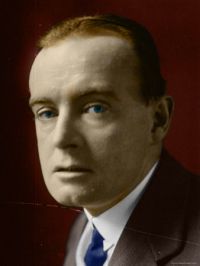
Portrait of Saki Saki Beasts and Super-Beasts — The Story-Teller (1914)

Bertha saw the wolf and saw that it was stealing towards her, and she began to wish that she had never been allowed to come into the park. She ran as hard as she could, and the wolf came after her with huge leaps and bounds. She managed to reach a shrubbery of myrtle bushes and she hid herself in one of the thickest of the bushes. The wolf came sniffing among the branches, its black tongue lolling out of its mouth and its pale grey eyes glaring with rage.
Source: Wikisource

Portrait of Saki Saki Beasts and Super-Beasts — The Story-Teller (1914)

There was a wave of reaction in favour of the story; the word horrible in connection with goodness was a novelty that commended itself. It seemed to introduce a ring of truth that was absent from the aunt’s tales of infant life.
“She was so good,” continued the bachelor, “that she won several medals for goodness, which she always wore, pinned on to her dress. There was a medal for obedience, another medal for punctuality, and a third for good behaviour.
Source: Wikisource

Portrait of Saki Saki Beasts and Super-Beasts — The Story-Teller (1914)

Bertha was trembling very much at having the wolf prowling and sniffing so near her, and as she trembled the medal for obedience clinked against the medals for good conduct and punctuality. The wolf was just moving away when he heard the sound of the medals clinking and stopped to listen
Source: Wikisource

Get perspective with Kwize: daily news enlightened by great literature