Summary

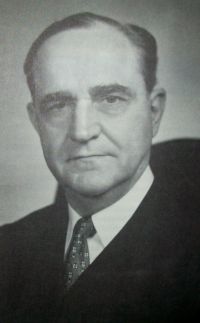
Portrait of Sherman Minton Sherman Minton Leyra v. Denno — Dissent

To let the jury pass upon this question is not so unfair to petitioner as to violate the fundamental principles of justice.
It is contended that the promises of leniency made by Dr. Helfand stand on a different footing; that once a promise is made, its effect must be presumed to continue until the promise is clearly withdrawn. But such has never been the law. See State v. Willis, 71 Conn. 293, 313, 41 A. 820. As in the case of other forms of coercion and inducement, once a promise of leniency is made a presumption arises that it continues to operate on the mind of the accused.
Source: Wikisource

Portrait of Sherman Minton Sherman Minton Leyra v. Denno — Dissent

If this disagreement between experts did not under New York law constitute a conflict in the evidence sufficient standing alone to go to the jury, there was other evidence, such as the Herrschaft confession, to be considered, together with the testimony of the assistant district attorneys that petitioner seemed quite normal and relaxed, and relieved to talk to them. As I said before, it is not our function to weigh the evidence. Whether there was any evidence to go to a jury is the question.
Source: Wikisource

Portrait of Sherman Minton Sherman Minton Leyra v. Denno — Dissent

The confession thus obtained was held inadmissible for the purpose of proving petitioner's guilt. But petitioner's subsequent confessions to Captain Meenahan of the police, to the two assistant district attorneys, and to his business associate, Herrschaft, were not invalidated as a matter of law. The case was remanded to the trial court with directions to submit to a jury under proper instructions the question whether the subsequent confessions resulted from or were influenced by the mental coercion which produced the Helfand confession.
Source: Wikisource

Get perspective with Kwize: daily news enlightened by great literature