Summary

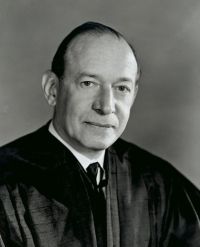
Portrait of Abe Fortas Abe Fortas Clewis v. Texas — Opinion of the Court

State of North Carolina, 384 U.S. 737, 741, 86 S.Ct. 1761, 1764, 16 L.Ed.2d 895 (1966) , applies equally here: 'As is almost invariably so in cases involving confessions obtained through unobserved police interrogation, there is a conflict in the testimony as to the events surrounding the interrogations.' For the purpose of deciding this case, we need not go beyond the State's version of the facts. Accordingly, we do not consider petitioner's claim that he was subjected to physical assaults.
Source: Wikisource

Portrait of Abe Fortas Abe Fortas Clewis v. Texas — Opinion of the Court

Petitioner, Marvin Peterson Clewis, stands convicted of the murder, by strangulation, of his wife, Dorothy Mae Clewis. The jury which found him guilty imposed a sentence of 25 years' imprisonment. During the course of his trial, petitioner moved to exclude from evidence three statements he had made while in police custody. Petitioner claimed that these statements had not been voluntarily made, and that their use against him at his trial would deny him due process of law, as guaranteed by the Fourteenth Amendment to the Constitution.
Source: Wikisource

Portrait of Abe Fortas Abe Fortas Clewis v. Texas — Opinion of the Court

Art. 217 (1925) ; now, substantially revised in other respects, Texas Code Crim.Proc. Arts. 14.06, 15.17 (1965) . This was followed by the prolonged, if intermittent, interrogation by numerous officers, in several buildings, punctuated by a trip to the gravesite and a long trip to another town, and accompanied by several polygraph tests. The police testimony makes it clear that the interrogation was not intended merely to secure information, but was specifically designed to elicit a signed statement of 'the truth'-and the police view of 'the truth' was made clear to petitioner.
Source: Wikisource

Get perspective with Kwize: daily news enlightened by great literature