Summary

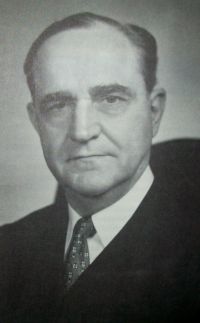
Portrait of Sherman Minton Sherman Minton Wissner v. Wissner — Dissent

I cannot believe that Congress intended to say to a serviceman, 'You may take your wife's property and purchase a policy of insurance payable to your mother, and we will see that your defrauded wife gets none of the money.' Certainly Congress did not intend to upset the long-standing community property law of the states where it was not necessary for the protection of the Government in its relation to the soldier or to the integrity of the fund from 'attachment, levy, or seizure.' These are words of art.
Source: Wikisource

Portrait of Sherman Minton Sherman Minton Wissner v. Wissner — Dissent

When he has done so all other persons than the one selected are foreclosed from claiming the proceeds as beneficiary. No further effect has the statute. Here the wife makes no claim to rights as a beneficiary. I am not persuaded that either the choice of beneficiary or the exemption provision should carry the implication of wiping out family property rights, which traditionally have been defined by state law. Fully to respect the right which Congress gave the serviceman to designate his beneficiary does not require disrespect of settled family law and the incidents of the family relationship.
Source: Wikisource

Portrait of Sherman Minton Sherman Minton Wissner v. Wissner — Dissent

It was the fund Congress was interested in protecting, not the beneficiary. I would affirm.
Notes
↑ '* * * the only test applied to this problem has been whether the premiums (on a policy issued on the life of a husband after coverture) are paid entirely from community funds. If so, the policy becomes a community asset and the nonconsenting wife may recover an undivided one-half thereof 'without regard' * * * to the disproportionate size of the premium when compared with the face of the policy.' Mundt v. Connecticut General Life Ins.
Source: Wikisource

Get perspective with Kwize: daily news enlightened by great literature