Summary

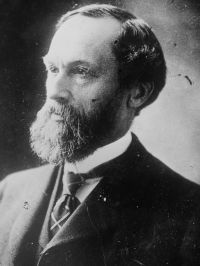
Portrait of Simeon E. Baldwin Simeon E. Baldwin The Captives of the Amistad — Section 3

The Amistad was so covered with barnacles and grass, as to be unfit for a voyage, and as Spain had no ship then in our waters, the minister asked that our government might send them back in one of its own vessels. The President consented, giving as one of his reasons that this would give the Africans the fairest opportunity to try their claim to liberty in the proper court, under the protection of the Spanish authorities, and promising to send with them the officers of the Washington, by whom they were captured, and a copy of the record of all the judicial proceedings in this country.
Source: Wikisource

Portrait of Simeon E. Baldwin Simeon E. Baldwin The Captives of the Amistad — Section 3

It is the opinion of many of the most eminent authorities in international law, that it rests in the discretion of the executive department of every government to surrender a fugitive from another country, by which his return is sought, upon reasonable proof that he has been guilty of any offence which is commonly regarded as a gross crime by civilized nations.
Source: Wikisource

Portrait of Simeon E. Baldwin Simeon E. Baldwin The Captives of the Amistad — Section 3

The Spanish minister had formally demanded their extradition as early as September 6th. In his dispatch of that date, after thanking our government for the seizure of the Amistad and release of Ruiz and Montez, he said:
“The act of humanity thus performed would have been complete, had the vessel at the same time been set at liberty, and the negroes sent to be tried by the proper tribunal, and by the violated laws of the country of which they are subjects.
Source: Wikisource

Get perspective with Kwize: daily news enlightened by great literature