Summary

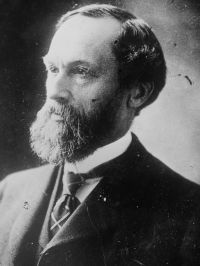
Portrait of Simeon E. Baldwin Simeon E. Baldwin The Captives of the Amistad — Section 4

Judge Judson had been appointed to office by President Van Buren not long before the capture of the Amistad, and as a lawyer he had been best known as having brought the criminal proceedings against Prudence Crandall for setting up a boarding-school at Canterbury, his own town, for colored girls, at which she received pupils who did not reside in Connecticut. [2] His decision was quite a disappointment to the Administration, which was not mitigated by the language in which it was expressed. “Cinquez and Grabeau,” read the opinion, “shall not sigh for Africa in vain.
Source: Wikisource

Portrait of Simeon E. Baldwin Simeon E. Baldwin The Captives of the Amistad — Section 4

The public feeling had become more and more intense the longer the Africans were held in captivity. They had made friends for themselves by their intercourse with our citizens at the jail. Professor George E. Day, of our Theological Seminary, then an assistant instructor there, had been engaged to give them regular instruction, as well as some notions of the Christian religion, and he had found them apt scholars.
Source: Wikisource

Portrait of Simeon E. Baldwin Simeon E. Baldwin The Captives of the Amistad — Section 4

And if, on the contrary, the decision of the court is different, you are to take out an appeal, and allow things to remain as they are until the appeal shall have been decided.
The Grampus was not the only ship in New Haven harbor, during those exciting days, under secret orders.. The members of the Amistad committee, or some of them, in connection with Nathaniel Jocelyn, a brother of Rev. S. S. Jocelyn of the committee, had another vessel here ready to receive the Africans, in case of an adverse decision, and run them off to some more friendly shore.
Source: Wikisource

Get perspective with Kwize: daily news enlightened by great literature