Summary

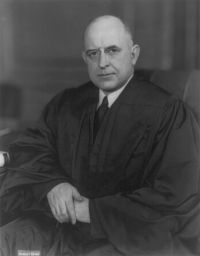
Portrait of Stanley Forman Reed Stanley Forman Reed Browder v. United States — Opinion of the Court

The Government does not urge that every use of a fraudulent passport is violative of the act but only those 'uses in connection with travel which are a part of the ordinary incentives for obtaining passports.' Certainly the use to prove citizenship on reentry to the country is within the ordinary incentives. [6] It is entirely clear from the record that passports were customarily used to prove the bearer's citizenship on reentry into the United States at the time of this alleged offense.
Source: Wikisource

Portrait of Stanley Forman Reed Stanley Forman Reed Browder v. United States — Opinion of the Court

A more difficult issue emerges from petitioner's assertion that the use proven here is not the kind of use covered by the statute. He finds the prohibitions directed against 'dishonest uses of the safe-conduct of the United States in foreign relations.' Such use must be 'willful and knowing,' an expression said to bear the connotation of evil or dishonest. Attention is called to alleged passport frauds of about the time of the passage of the passport sections and to the recommendation of the Attorney General that Congress pass legislation against the fraudulent use of passports.
Source: Wikisource

Portrait of Stanley Forman Reed Stanley Forman Reed Browder v. United States — Opinion of the Court

The passport may later save the time and inconvenience of applying for one abroad should the holder desire to travel in countries where passports are required. It will also enable the holder to establish his American citizenship upon his return to the United States and thus facilitate his entry. American citizens who leave the United States without passports should carry with them proof of their citizenship, such as birth, baptism, or naturalization certificates.'↑ 40 Stat.
Source: Wikisource

Get perspective with Kwize: daily news enlightened by great literature