Summary

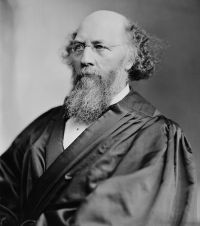
Portrait of Stephen Johnson Field Stephen Johnson Field Cowdrey v. Galveston Houston and Henderson Railroad Company…

At any rate, as an officer of the court, the receiver could not be allowed to determine the question of its importance, either to the public or the company, and, acting upon such determination, to appropriate funds in his custody to aid or defeat the measure, without sanctioning a principle which would open the door to all sorts of abuses. A receiver is not authorized, without the previous direction of the court, to incur any expenses on account of property in his hands beyond what is absolutely essential to its preservation and use, as contemplated by his appointment.
Source: Wikisource

Portrait of Stephen Johnson Field Stephen Johnson Field Cowdrey v. Galveston Houston and Henderson Railroad Company…

In February, 1867, a suit was commenced in the Circuit Court of the United States for the Eastern District of Texas, for the foreclosure of certain mortgages executed by the Galveston, Houston, and Henderson Railroad Company, a corporation created by the legislature of Texas, and the sale of the mortgaged property. The mortgages were adjudged valid by the court, and a sale of the mortgaged property was decreed. Subsequently, in 1869, by consent of the parties, Cowdrey, one of the complainants, was authorized to take the charge and management of the property, and act as receiver of the court.
Source: Wikisource

Portrait of Stephen Johnson Field Stephen Johnson Field Cowdrey v. Galveston Houston and Henderson Railroad Company…

The fact that the retainer was by the trustees in the mortgages, who have since died, and that the present suit was prosecuted by the bondholders, the cestuis que trust, does not affect the position of the claim. The trustees, had they lived, would have been entitled to retain out of the funds received by them sufficient to meet the claim. They would have had an equitable right not merely to be reimbursed from such funds all reasonable expenses incurred, but also to retain from the funds sufficient to meet all reasonable liability contracted in the execution of their trust.
Source: Wikisource

Get perspective with Kwize: daily news enlightened by great literature