Summary

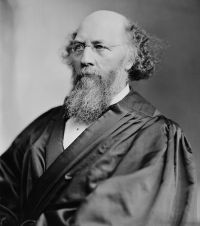
Portrait of Stephen Johnson Field Stephen Johnson Field Durant v. Essex Company (74 U.S. 107…

The statement which always accompanies a judgment in such case, that it is rendered by a divided court, is only intended to show that there was a division among the judges upon the questions of law or fact involved, not that there was any disagreement as to the judgment to be entered upon such division. It serves to explain the absence of any opinion in the cause, and prevents the decision from becoming an authority for other cases of like character.
Source: Wikisource

Portrait of Stephen Johnson Field Stephen Johnson Field Durant v. Essex Company (74 U.S. 107…

It has long been the doctrine in this country and in England, where courts consist of several members, that no affirmative action can be had in a cause where the judges are equally divided in opinion as to the judgment to be rendered or order to be made. If affirmative action is necessary for the further progress of the cause, the division operates as a stay of proceedings.
Source: Wikisource

Portrait of Stephen Johnson Field Stephen Johnson Field Durant v. Essex Company (74 U.S. 107…

In cases of appeal or writ of error in this court, the appellant or plaintiff in error is always the moving party. It is affirmative action which he asks. The question presented is, shall the judgment, or decree, be reversed? If the judges are divided, the reversal cannot be had, for no order can be made. The judgment of the court below, therefore, stands in full force. It is, indeed, the settled practice in such case to enter a judgment of affirmance
Source: Wikisource

Get perspective with Kwize: daily news enlightened by great literature