Summary

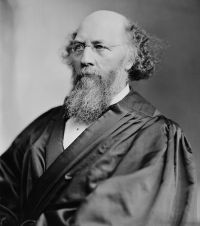
Portrait of Stephen Johnson Field Stephen Johnson Field Ex Parte Jackson — Opinion of the Court

Great reliance is placed by the petitioner upon these views, coming, as they did in many instances, from men alike distinguished as jurists and statesmen. But it is evident that they were founded upon the assumption that it was competent for Congress to prohibit the transportation of newspapers and pamphlets over postal-routes in any other way than by mail; and of course it would follow, that if, with such a prohibition, the transportation in the mail could also be forbidden, the circulation of the documents would be destroyed, and a fatal blow given to the freedom of the press.
Source: Wikisource

Portrait of Stephen Johnson Field Stephen Johnson Field Ex Parte Jackson — Opinion of the Court

The power vested in Congress 'to establish post-offices and post-roads' has been practically construed, since the foundation of the government, to authorize not merely the designation of the routes over which the mail shall be carried, and the offices where letters and other documents shall be received to be distributed or forwarded, but the carriage of the mail, and all measures necessary to secure its safe and speedy transit, and the prompt delivery of its contents.
Source: Wikisource

Portrait of Stephen Johnson Field Stephen Johnson Field Ex Parte Jackson — Opinion of the Court

The difficulty attending the subject arises, not from the want of power in Congress to prescribe regulations as to what shall constitute mail matter, but from the necessity of enforcing them consistently with rights reserved to the people, of far greater importance than the transportation of the mail. In their enforcement, a distinction is to be made between different kinds of mail matter,-between what is intended to be kept free from inspection, such as letters, and sealed packages subject to letter postage
Source: Wikisource

Get perspective with Kwize: daily news enlightened by great literature