Summary

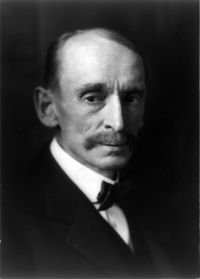
Portrait of William R. Day William R. Day St. Louis Railway Company v. United States…

And thus it appears that one section of the statutes directs free transportation of 'all property and troops of the United States' and a wholly different section requires transportation of the United States mail 'under the direction of the Post Office Department, at such price as Congress may by law direct.'
Through the Post Office Department, the United States are engaged in handling the mails for pay. Their transportation is part of a well-defined business. In the orderly course and as an essential part of that business emptied sacks are constantly being returned for further use.
Source: Wikisource

Portrait of William R. Day William R. Day St. Louis Railway Company v. United States…

The purpose was to secure transportation at less than former cost, and to such end Congress, in effect, commanded that emptied bags, a portion of the mails for which rapid movement is not essential, 'shall be transmitted by either freight or express' and compensation made according to the ordinary rates. Under this interpretation, the railroad would suffer no oppressive burden and contemplated economies would be effectuated.
Source: Wikisource

Portrait of William R. Day William R. Day St. Louis Railway Company v. United States…

The act of Congress providing for 50 per cent. rates concerns only 'army' transportation and is not applicable to this case. See Act June 30, 1882, c. 254, 22 Stat. 120, 1 Supp. Rev. Stats. 375, 376. The empty mail bags were property, and belonged to the United States. When the Government required their transportation by freight, the former legislation which accompanied the grant of lands to this railway company controlled the terms of carriage.
Source: Wikisource

Get perspective with Kwize: daily news enlightened by great literature