Summary

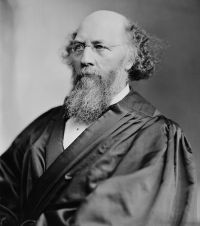
Portrait of Stephen Johnson Field Stephen Johnson Field Garrison v. City of New York — Opinion of the Court

The objection to the act of 1871, that it impairs the vested rights of the plaintiff, and is, therefore, repugnant to the constitution of the State, is already disposed of by what we have said upon the first objection. There is no such vested right in a judgment, in the party in whose favor it is rendered, as to preclude its re-examination and vacation in the ordinary modes provided by law, even though an appeal from it may not be allowed; and the award of the commissioners, even when approved by the court, possesses no greater sanctity.
Source: Wikisource

Portrait of Stephen Johnson Field Stephen Johnson Field Garrison v. City of New York — Opinion of the Court

And the construction of the statute of the State by the Court of Appeals, and its decision as to the powers of the Supreme Court of the State to correct or set aside its own judgments, upon application within reasonable time, for mistake, irregularity, or fraud, are conclusive upon us.
There is, therefore, no case presented in which it can be justly contended that a contract has been impaired. It may be doubted whether a judgment not founded upon an agreement, express or implied, is a contract within the meaning of the constitutional prohibition.
Source: Wikisource

Portrait of Stephen Johnson Field Stephen Johnson Field Garrison v. City of New York — Opinion of the Court

The proceeding to ascertain the benefits or losses which will accrue to the owner of property when taken for public use, and thus the compensation to be made to him, is in the nature of an inquest on the part of the State, and is necessarily under her control. It is her duty to see that the estimates made are just, not merely to the individual whose property is taken, but to the public which is to pay for it.
Source: Wikisource

Get perspective with Kwize: daily news enlightened by great literature