Summary

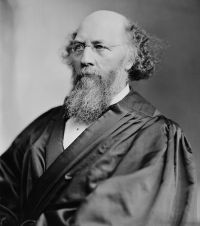
Portrait of Stephen Johnson Field Stephen Johnson Field Horn v. Lockhart — Opinion of the Court

We admit that the acts of the several States in their individual capacities, and of their different departments of government, executive, judicial, and legislative, during the war, so far as they did not impair or tend to impair the supremacy of the National authority, or the just rights of citizens under the Constitution, are, in general, to be treated as valid and binding. The existence of a state of insurrection and war did not loosen the bonds of society, or do away with civil government, or the regular administration of the laws.
Source: Wikisource

Portrait of Stephen Johnson Field Stephen Johnson Field Horn v. Lockhart — Opinion of the Court

In such a case it does not lie in the mouth of a complainant to say that the court of probate could not exercise judicial power during the war, nor that these proceedings are erroneous in carrying into effect the laws of the Confederate government, because made to facilitate the war against the government of the United States. If the statute was illegal the complainants must be considered in law as having been parties to it, and as responsible and as much bound as if the record had shown that they were themselves the authors of it
Source: Wikisource

Portrait of Stephen Johnson Field Stephen Johnson Field Horn v. Lockhart — Opinion of the Court

And the question always is, or should be, when objection is taken to the jurisdiction of the court by reason of the citizenship of some of the parties, whether to a decree authorized by the case presented, they are indispensable parties, for if their interests are severable and a decree without prejudice to their rights can be made, the jurisdiction of the court should be retained and the suit dismissed as to them.
Source: Wikisource

Get perspective with Kwize: daily news enlightened by great literature