Summary

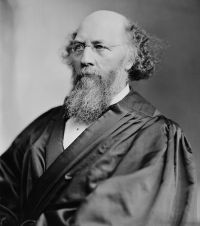
Portrait of Stephen Johnson Field Stephen Johnson Field United States v. Chouteau — Opinion of the Court

It is certainly one way of defending against the charge of a wrongful act for which damages are sought, to show that, notwithstanding the wrong committed, the damages resulted from other causes, however objectionable a pleading might be with averments to that effect instead of a distinct traverse of the allegations of the complaint. If, for example, a party should charge another with inflicting upon his person a wound by which he lost an arm, it would be a good defence to show that the loss resulted from unskilful medical treatment or neglect and not from the wound inflicted.
Source: Wikisource

Portrait of Stephen Johnson Field Stephen Johnson Field United States v. Chouteau — Opinion of the Court

Therefore the action, so far as damages are claimed for the particular omission of duty mentioned, must fail.
It is true that the breaches of duty, which are stated by the defendants in their answer as the means by which the United States were defrauded, are a series of stupendous frauds, for which the guilty parties deserve severe punishment; still they were none the less available as a defence to an action charging to other causes the damages which they produced.
Source: Wikisource

Portrait of Stephen Johnson Field Stephen Johnson Field United States v. Chouteau — Opinion of the Court

Here a specific omission of duty on the part of the distiller is alleged, for which it is sought to charge both him and his sureties on their bond. Their liability is only to the extent of the damages sustained. If none resulted to the United States from the omission stated, none can be recovered either against him or his sureties. The law does not affix any specific penalty for the omission.
Source: Wikisource

Get perspective with Kwize: daily news enlightened by great literature