Summary

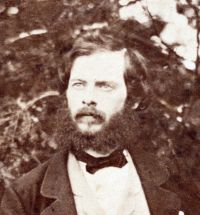
Portrait of Theodore Winthrop Theodore Winthrop The Canoe and the Saddle — Chapter IX

In moments of stillness, while the flapping of these enormous pinions ceased, and the gale went gliding on by impetus, we could hear the far-away rumble of the river. Sound is only second to sight as a guide out of darkness. The music of a stream, singing with joy that it knows its way, is pleasanter guidance than the bark of village cur, who, though he bite not because he bark, may have a brother deputed to do that rougher mouthing. Following, then, the sound, we presently came upon the source of sound, the Nachchese.
Source: Wikisource

Portrait of Theodore Winthrop Theodore Winthrop The Canoe and the Saddle — Chapter IX

To a patroller of crowded city avenues, it may not seem a significant fact that a man in a solitary trail met a man. But to me, a not unsociable being, travelling with a half-insolent, half-indifferent, jargoning savage, down a Via Mala of desolation, toward a realm of possibly unbrotherly nomads, an encounter by the wayside with a man and a brother was a fact to enjoy and an emotion to chronicle.
Source: Wikisource

Portrait of Theodore Winthrop Theodore Winthrop The Canoe and the Saddle — Chapter IX

When it might, the trail followed the terrace above the Nachchese. Often wherever the trail might choose to follow, we might not follow it in the dark. Stony arroyos would cut it in twain, or a patch of wild-sage bushes or a belt of hazels and alders send it astray. Then would Loolowcan open wide his dusky eyes, to collect every belated glimmer of twilight, and zigzag until again he found the clew of our progress. While he searched, Klale and Antipodes took large morsels of epicurean bunchgrass, in convenient tufts, a generous mouthful in each.
Source: Wikisource

Get perspective with Kwize: daily news enlightened by great literature