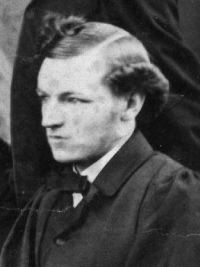
Thomas Erskine Holland

Thomas Erskine Holland

Summary

Portrait of Thomas Erskine Holland Thomas Erskine Holland Dictionary of National Biography (1901)

A thin octavo, published in 1874, upon 'The Rights and Duties of Neutrals' was followed up in 1880 by Hall's magnum opus, 'International Law,' the publication of which marks an epoch in the literature of the subject. No work so well proportioned, so tersely expressed, so replete with common-sense, so complete, had ever appeared in this country. It has won its way even among continental jurists, to whom as a rule Hall's adherence to what they call l'école historico-pratique is distasteful.
Source: Wikisource

Portrait of Thomas Erskine Holland Thomas Erskine Holland Dictionary of National Biography (1901)

HALL, WILLIAM EDWARD (1835–1894) , writer on international law, born at Leatherhead on 22 Aug. 1835, was the only child of William Hall, a descendant of a junior branch of the Halls of Dunglass, and of Charlotte, daughter of William Cotton. The father having been at one time physician to the king of Hanover, and subsequently to the British legation at Naples, much of Hall's childhood was spent upon the continent, whence perhaps his taste in after life for art and for modern languages.
Source: Wikisource

Portrait of Thomas Erskine Holland Thomas Erskine Holland Dictionary of National Biography (1901)

His energies were thrown rather into foreign travel, sport, and the study of history, art, languages, botany, and strategy. He was an enthusiastic climber and member of the Alpine Club, making several first ascents, notably that of the Lyskamm, and contributing both with pen and pencil to the 'Alpine Journal.' In 1864 he was under fire during the defence of Sonderborg by the Danes, as he was also, twenty years later, during some of the operations in the neighbourhood of Suakim.
Source: Wikisource

Get perspective with Kwize: daily news enlightened by great literature