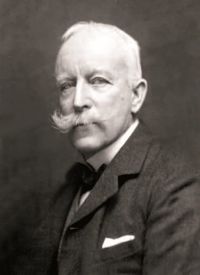
Thomas Hungerford Holdich

Thomas Hungerford Holdich

Summary

Portrait of Thomas Hungerford Holdich Thomas Hungerford Holdich 1911 Encyclopædia Britannica, Volume 15… (1911)

KHYBER PASS, the most important of the passes which lead from Afghanistan into India. It is a narrow defile winding between cliffs of shale and limestone 600 to 1000 ft. high, stretching up to more lofty mountains behind. No other pass in the world has possessed such strategic importance or retains so many historic associations as this gateway to the plains of India.
Source: Wikisource

Portrait of Thomas Hungerford Holdich Thomas Hungerford Holdich 1911 Encyclopædia Britannica, Volume 15… (1911)

Pursuing the main road from Peshawar to Kabul, the fort of Jamrud, which commands the British end of the Khyber Pass, lies some 11 m. W. of Peshawar. The road leads through a barren stony plain, cut up by water-courses and infested by all the worst cut-throats in the Peshawar district. Some three miles beyond Jamrud the road enters the mountains at an opening called Shadi Bagiar, and here the Khyber proper begins.
Source: Wikisource

Portrait of Thomas Hungerford Holdich Thomas Hungerford Holdich 1911 Encyclopædia Britannica, Volume 15… (1911)

The Kabul River breaks through this northern spur of the Safed Koh; and in breaking through it is forced to the northward in a curved channel or trough, deeply sunk in the mountains between terrific cliffs and precipices, where its narrow waterway affords no foothold to man or beast for many miles. To reach the Kabul River within Afghan territory it is necessary to pass over this water-divide; and the Khyber stream, flowing down from the pass at Landi Kotal to a point in the plains opposite Jamrud, 9 m. W. of Peshawar, affords the opportunity.
Source: Wikisource

Get perspective with Kwize: daily news enlightened by great literature