Summary

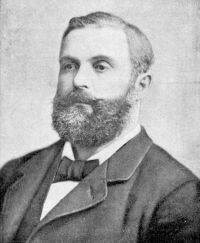
Portrait of Thomas W. Knox Thomas W. Knox Decisive Battles Since Waterloo… (1902)

In land forces, the armies of the two countries were proportionately the same as their navies, Chili being superior in numbers, drill, discipline, effectiveness, and equipment. Chili had provided herself with Krupp breech-loading field-guns, while Peru had nothing else than the old-fashioned muzzle-loading smooth-bore cannon, of a range far inferior to that of the Chilian Krupps. At the outbreak of the war Bolivia was very poorly provided for active operations.
Source: Wikisource

Portrait of Thomas W. Knox Thomas W. Knox Decisive Battles Since Waterloo… (1902)

Chili was in far better condition for war than either of her adversaries. Owing to the character of the Pacific coast of South America, the strip of land between the Andes and the ocean consisting of waterless desert with occasional valleys, every thing depends upon the possession of the sea. Chili had been increasing her navy, while that of Peru had not been augmented. The Chilians had 2 powerful iron-clads of the newest pattern, the Almirante Cochrane and Blanco Encalada, which were alone capable of destroying the entire Peruvian fleet.
Source: Wikisource

Portrait of Thomas W. Knox Thomas W. Knox Decisive Battles Since Waterloo… (1902)

The Peruvians had a coast line of 1,400 miles to defend, and the peculiar formation of the country made the defence of this long line impossible. It must be borne in mind that the coast of Peru is rainless, and its fertile valleys occur at long intervals, between tracts of waterless deserts. The railways in Peru do not skirt the coast, but run from it to the interior; in the southern part of Peru the deserts cover nearly the whole of the area of the country, and are backed at distances varying from 30 to 100 miles by the Cordilleras, or outlying chain of the Andes.
Source: Wikisource

Get perspective with Kwize: daily news enlightened by great literature