Summary

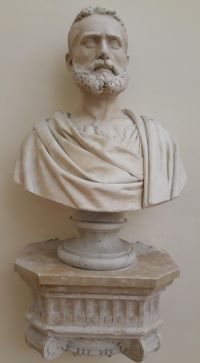
Portrait of Vitruvius Vitruvius Ten Books on Architecture — Book X - Chapter XIII - Siege Machines

His larger tower, he adds, was one hundred and twenty cubits high and twenty-three and one half cubits broad, diminishing like the other to one fifth less; the uprights, one foot at the bottom and six digits at the top. He made this large tower twenty stories high, each story having a gallery round it, three cubits wide. He covered the towers with rawhide to protect them from any kind of missile.
Source: Wikisource

Portrait of Vitruvius Vitruvius Ten Books on Architecture — Book X - Chapter XIII - Siege Machines

The tortoise of the battering ram was constructed in the same way. It had, however, a base of thirty cubits square, and a height, excluding the pediment, of thirteen cubits; the height of the pediment from its bed to its top was seven cubits. Issuing up and above the middle of the roof for not less than two cubits was a gable, and on this was reared a small tower four stories high, in which, on the top floor, scorpiones and catapults were set up, and on the lower floors a great quantity of water was stored, to put out any fire that might be thrown on the tortoise.
Source: Wikisource

Portrait of Vitruvius Vitruvius Ten Books on Architecture — Book X - Chapter XIII - Siege Machines

Diades shows in his writings that he invented moveable towers, which he used also to take apart and carry round with the army, and likewise the borer, and the scaling machine, by means of which one can cross over to the wall on a level with the top of it, as well as the destroyer called the raven, or by others the crane.
Source: Wikisource

Get perspective with Kwize: daily news enlightened by great literature