Summary

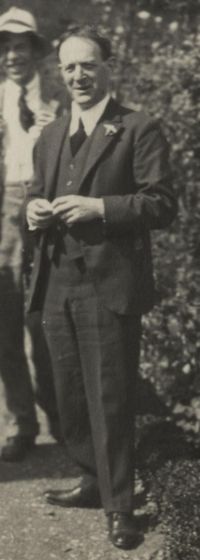
Portrait of Walter De la Mare Walter De la Mare The Riddle and Other Stories — Miss Duveen (1923)

Sometimes it was not Miss Duveen that was a child again, but I that had grown up. “Had now you been your handsome father—and I see him, O, so plainly, dear child—had you been your father, then I must, of course, have kept to the house ... I must have; it is a rule of conduct, and everything depends on them. Where would Society be else?” she cried, with an unanswerable blaze of intelligence. “I find, too, dear Arthur, that they increase—the rules increase. I try to remember them. My dear cousin, Miss Coppin, knows them all.
Source: Wikisource

Portrait of Walter De la Mare Walter De la Mare The Riddle and Other Stories — Miss Duveen (1923)

I shook my head dubiously.
“Why should he?” she cried scornfully. But between ourselves, Arthur, that is a thing we must learn, and never mind the headache. We cannot, of course, know everything. Even Miss Coppin does not know everything—” she leaned forward with intense earnestness—“though I don't tell her so. We must try to learn all we can; and at once. One thing, dear child, you may be astonished to hear, I learned only yesterday, and that is how exceedingly sad life is.”
Source: Wikisource

Portrait of Walter De la Mare Walter De la Mare The Riddle and Other Stories — Miss Duveen (1923)

And I, too, nodded my head in instinctive and absorbed imitation. Miss Duveen laughed gaily. “He understands, he understands!” she cried, as if to many listeners. “Oh, what a joy it is in this world, Arthur, to be understood. Now tell me,” she continued with immense nicety, “tell me, how's your dear mamma?”
I shook my head.
“Ah,” she cried, “I see, I see; Arthur has no mamma. We will not refer to it. No father, either?”
Source: Wikisource

Get perspective with Kwize: daily news enlightened by great literature