Summary

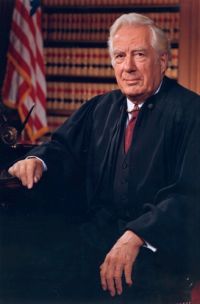
Portrait of Warren E. Burger Warren E. Burger Harris v. New York — Opinion of the Court

The impeachment process here undoubtedly provided valuable aid to the jury in assessing petitioner's credibility, and the benefits of this process should not be lost, in our view, because of the speculative possibility that impermissible police conduct will be encouraged thereby. Assuming that the exclusionary rule has a deterrent effect on proscribed police conduct, sufficient deterrence flows when the evidence in question is made unavailable to the prosecution in its case in chief.
Every criminal defendant is privileged to testify in his own defense, or to refuse to do so.
Source: Wikisource

Portrait of Warren E. Burger Warren E. Burger Harris v. New York — Opinion of the Court

At trial the prosecution made no effort in its case in chief to use the statements allegedly made by petitioner, conceding that they were inadmissible under Miranda v. Arizona, 384 U.S. 436, 86 S.Ct. 1602, 16 L.Ed.2d 694 (1966) . The transcript of the interrogation used in the impeachment, but not given to the jury, shows that no warning of a right to appointed counsel was given before questions were put to petitioner when he was taken into custody. Petitioner makes no claim that the statements made to the police were coerced or involuntary.
Source: Wikisource

Get perspective with Kwize: daily news enlightened by great literature