Summary

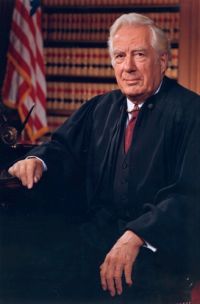
Portrait of Warren E. Burger Warren E. Burger New York Times Company v. United States…

To me it is hardly believable that a newspaper long regarded as a great institution in American life would fail to perform one of the basic and simple duties of every citizen with respect to the discovery or possession of stolen property or secret government documents. That duty, I had thought perhaps naively-was to report forthwith, to responsible public officers. This duty rests on taxi drivers, Justices, and the New York Times. The course followed by the Times, whether so calculated or not, removed any possibility of orderly litigation of the issues.
Source: Wikisource

Portrait of Warren E. Burger Warren E. Burger New York Times Company v. United States…

Why are we in this posture, in which only those judges to whom the First Amendment is absolute and permits of no restraint in any circumstances or for any reason, are really in a position to act?
I suggest we are in this posture because these cases have been conducted in unseemly haste. Mr. Justice HARLAN covers the chronology of events demonstrating the hectic pressures under which these cases have been processed and I need not restate them.
Source: Wikisource

Portrait of Warren E. Burger Warren E. Burger New York Times Company v. United States…

The newspapers make a derivative claim under the First Amendment; they denominate this right as the public 'right to know'; by implication, the Times asserts a sole trusteenship of that right by virtue of its journalistic 'scoop.' The right is asserted as an absolute. Of course, the First Amendment right itself is not an absolute, as Justice Holmes so long ago pointed out in his aphorism concerning the right to shout 'fire' in a crowded theater if there was no fire.
Source: Wikisource

Get perspective with Kwize: daily news enlightened by great literature