Summary

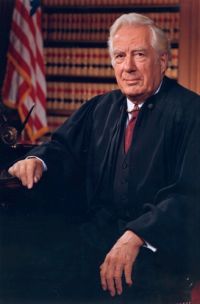
Portrait of Warren E. Burger Warren E. Burger Tooahnippah v. Hickel — Opinion of the Court

In reaching our conclusions it is not necessary to accept the contention of the petitioners that the Secretary's authority is narrowly limited to passing on the formal sufficiency of a document claimed to be a will. The power to make testamentary dispositions arises by statute; here we deal with a special kind of property right under allotments from the Government. The right is not absolute; the allottee is the beneficial owner while the Government is trustee. 25 U.S.C. § 348. The Indian's right to make inter vivos dispositions is limited and requires approval of the Secretary.
Source: Wikisource

Portrait of Warren E. Burger Warren E. Burger Tooahnippah v. Hickel — Opinion of the Court

The court concluded that the Regional Solicitor incorrectly viewed the Secretary's powers as authorizing disapproval of any will thought unwise or unequitable, and stated: 'Congress has conferred the right to make a will upon the Indian and not upon the Secretary. The Secretary can no more use his approval powers to substitute his will for that of the Indian than he can dictate its terms.' 277 F.Supp., at 468.
Source: Wikisource

Portrait of Warren E. Burger Warren E. Burger Tooahnippah v. Hickel — Opinion of the Court

The Secretary's task is not always an easy one and perhaps is rendered more difficult by the absence of regulations giving guidelines. It is not difficult to conceive of dispositions so lacking in rational basis that the Secretary's approval could reasonably be withheld under § 373 even though the same scheme of disposition by a non-Indian of unrestricted property might pass muster in a conventional probate proceeding
Source: Wikisource

Get perspective with Kwize: daily news enlightened by great literature