Summary

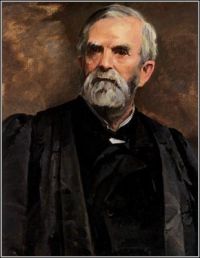
Portrait of William Burnham Woods William Burnham Woods Bissell v. Foss — Opinion of the Court

Looking at all the testimony it is impossible to reach the conclusion, unless we disregard altogether the evidence of Foss and rely entirely on that of Bissell, that there was any well-defined agreement between them to buy out the Missourians at a specified price, or that the two had available resources to make the purchase. Nothing but an arrangement left at loose ends can be deduced from the evidence. But if the agreement had been clear and definite, it could bind neither Foss nor Bissell until Hunter was consulted and agreed to it.
Source: Wikisource

Portrait of William Burnham Woods William Burnham Woods Bissell v. Foss — Opinion of the Court

There is no relation of trust or confidence between mining parties which is violated by the sale and assignment by one partner to a stranger, or to one of the associates, of his share in the property and business of the association. It results as a conclusion from these premises that Bissell has suffered no wrong at the hands of either Hunter or Foss, on the ground that they were his tenants in common or partners, by reason of any contract made between the latter in reference to the purchase of the share of the Missourians in their joint enterprise.
Source: Wikisource

Portrait of William Burnham Woods William Burnham Woods Bissell v. Foss — Opinion of the Court

But the appellant insists that there was a mutual agreement between Bissell and Foss that if either made the purchase it should be for the benefit of all, and that this agreement, although not amounting to a contract which could be specifically enforced if it had been made with a stranger, created between parties who sustained to each other the confidential and trust relations which existed between these parties a constructive trust which would be enforced in equity.
Source: Wikisource

Get perspective with Kwize: daily news enlightened by great literature