Summary

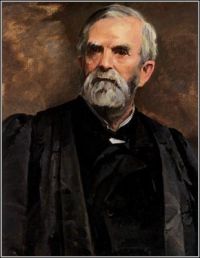
Portrait of William Burnham Woods William Burnham Woods County of Moultrie v. Fairfield…

It is, therefore, clear that the donation voted for at that election is taken out of the operation of that clause of the Constitution of the State which declares that no municipality shall make donations to, or loan its credit in aid of, any railroad or private corporation. In our opinion none of the objections which we have noticed, to the validity of the bonds under consideration, are well taken.
Source: Wikisource

Portrait of William Burnham Woods William Burnham Woods County of Moultrie v. Fairfield…

And the contention is that as there was no vote of the people which authorized the donation in question to the Decatur, Sullivan, and Matton Railroad Company, the power of the county to make the donation was cut off by the Constitution of 1870.
There can be no doubt to what company the people intended to make their donation. The statute-books of the State of Illinois will be searched in vain to find an act incorporating a railroad company by the name of the Mattoon, Sullivan, and Decatur Railroad Company.
Source: Wikisource

Portrait of William Burnham Woods William Burnham Woods County of Moultrie v. Fairfield…

If either class of bonds, therefore, has any advantage over the other on the question of authority for their issue, it would seem to be the donation bonds. Secondly, as there was authority for the issue of the donation bonds, which is recited on their face by reference to the law from which it was derived, the purchaser before maturity was not bound to look further. The county having authority to issue bonds like those purchased by him, he was under no obligation to inquire whether the county had issued more bonds than the law authorized.
Source: Wikisource

Get perspective with Kwize: daily news enlightened by great literature