Summary

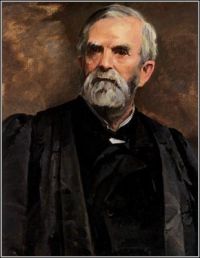
Portrait of William Burnham Woods William Burnham Woods Higgins v. McCrea — Opinion of the Court

Section 5228 of the Revised Statutes of Ohio of 1880 provides 'that when, upon the pleadings, one party is entitled by law to judgment in his favor, judgment shall be so rendered by the court, though a verdict has been found against such party.' It is clear that, upon the defendant's counterclaim, which showed that he had no valid cause of action against the plaintiffs, no valid judgment could be rendered against them.
Source: Wikisource

Portrait of William Burnham Woods William Burnham Woods Higgins v. McCrea — Opinion of the Court

No court will lend its aid to a man who founds his cause of action upon an immoral or illegal act. If, from the plaintiff's own stating or otherwise, the cause of action appear to rise ex turpi causa, or the transgression of a positive law of the country, then the court says he has no right to be assisted. It is upon that ground the court goes, not for the sake of the defendant, but because they will not lend their aid to such a plaintiff.
Source: Wikisource

Portrait of William Burnham Woods William Burnham Woods Higgins v. McCrea — Opinion of the Court

The defendant, therefore, on August 1, 1883, had no contract on which he could have demanded the delivery of a pound of pork or lard, or have sustained an action against any one for failure to deliver. The money which the plaintiffs seek to recover in this suit was not, therefore, paid out for the use of the defendant, and an action therefor cannot be maintained against him. The court would therefore have been justified in charging the jury that, upon the plaintiffs' own testimony, they were not entitled to a verdict against the defendant upon the cause of action set out in their petition.
Source: Wikisource

Get perspective with Kwize: daily news enlightened by great literature