Summary

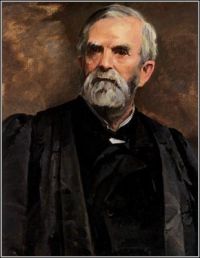
Portrait of William Burnham Woods William Burnham Woods Jackson v. Lawrence — Opinion of the Court

There being no dispute, therefore, in relation to the terms of the agreement between Lancaster and Wells, on which the deed of the former to the latter was executed and delivered, it is to be read in equity precisely as if the agreement were set out therein, and is to be considered a mortgage to secure the payment of the note made by Lancaster to Wells according to its tenor, with power to Wells in default of payment to sell the mortgaged premises. This condition must be taken as a whole; no part of it can be rejected.
Source: Wikisource

Portrait of William Burnham Woods William Burnham Woods Jackson v. Lawrence — Opinion of the Court

This conclusion does not depend upon the fact whether or not Tallman purchased with or without notice of the verbal condition under which the deed from Lancaster to Wells was executed. The rights of Lancaster, and those claiming under him, are not strengthened by the fact that the condition was a verbal one. They are in no better position than if the condition had been incorporated in the deed and put upon the public records, thereby giving constructive notice to all the world. In the latter case it is clear that Wells, having power to sell, could sell to whomsoever he chose.
Source: Wikisource

Portrait of William Burnham Woods William Burnham Woods Jackson v. Lawrence — Opinion of the Court

In case of default, Drumrite was authorized to sell the land to enforce payment of his debot. Wilson failed to pay the debt when due, and Drumrite sold part of the land to a purchaser without notice. The court, laying stress upon the fact that the vendee had no notice of the condition, held that the sale was valid, but that Drumrite must account to Wilson for the land sold, and must reconvey the residue.
Source: Wikisource

Get perspective with Kwize: daily news enlightened by great literature