Summary

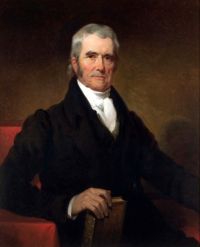
Portrait of John Marshall John Marshall Dick v. Balch — Opinion of the Court

The deed conveying his property to a trustee for the use of his creditors, and the instrument of release, were both produced, and appear in the record. The deed of release enumerates the creditors of John Peter, some of whom have not executed it. It is absolute on its face, and the plaintiffs in error deny that it was intended to be conditional. They also contend, that no parol evidence is admissible to vary a written contract, by introducing into it a condition which entirely changes its character.
Source: Wikisource

Portrait of John Marshall John Marshall Dick v. Balch — Opinion of the Court

John Peter, who was engaged extensively in commerce, had sustained heavy losses by fire. Several of his friends and creditors agreed to receive a conveyance of all his remaining property, to be distributed rateably among them, and to advance him a considerable sum of money to set him up again in business. The defendants in error allege, that this agreement was on the condition, that all his creditors should sign a release of his debts, so as to leave his future acquisitions exonerated from their claims
Source: Wikisource

Portrait of John Marshall John Marshall Dick v. Balch — Opinion of the Court

These objections, it may be observed, cannot be connected with the release. That bears date in 1920, and the mortgage deed was executed in 1809. If, therefore, he never did assert any claim, or intimate its existence to the said Elizabeth or her friends, he was not restrained from doing so by having released it. But the mortgage deed was recorded, and this is considered in law, as notice to all the world, and dispenses with the necessity of personal notice to purchasers. A deed cannot with any propriety be said to be concealed, which is placed upon the public record, as required by law
Source: Wikisource

Get perspective with Kwize: daily news enlightened by great literature