Summary

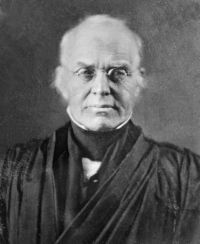
Portrait of Joseph Story Joseph Story Lessee of Tucker v. Moreland — Opinion of the Court

In the next place, that a mere acquiescence in the same conveyance, without objection, for several months after his arrival at age, is also a confirmation of it. In our judgment, neither proposition is maintainable. The mere recognition of the fact that a conveyance has been made, is not, per se, proof of a confirmation of it. Lord Ellenborough, in Baylis v. Dineley (3 M. & Selw. 482,) was of opinion, that an act of as high a solemnity as the original act was necessary to a confirmation. 'We cannot (said he) surrender the interests of the infant into such hands as he may chance to get.
Source: Wikisource

Portrait of Joseph Story Joseph Story Lessee of Tucker v. Moreland — Opinion of the Court

If, on the other hand, that deed was voidable only, and not void, and yet it has been avoided by the subsequent conveyance to the defendant by Barry; then the same conclusion follows. And these, accordingly, are the considerations, which are presented under the present instruction.
In regard to the point, whether the deed of lands by an infant is void or voidable at the common law, no inconsiderable diversity of opinion is to be found in the authorities.
Source: Wikisource

Portrait of Joseph Story Joseph Story Lessee of Tucker v. Moreland — Opinion of the Court

This is the sense in which the doctrine of Perkins is laid down in Sheppard's Touchstone, 232. Of this latter opinion, also, are some other highly respectable text writers; (d) and, perhaps, the weight of
It is apparent, then, upon the English authorities, that however true it may be, that an infant may so far bind himself by deed in certain cases, as that in consequence of the solemnity of the instrument it is voidable only, and not void; yet that the instrument, however solemn, is held to be void, if upon its face it is apparent, that it is to the prejudice of the infant.
Source: Wikisource

Get perspective with Kwize: daily news enlightened by great literature