Summary

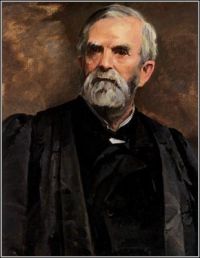
Portrait of William Burnham Woods William Burnham Woods Potter v. United States (107 U.S. 126…

These moneys are, therefore, public moneys. They belong neither to Potter not the pre-emptors, and must, consequently, be the property of the United States. It was, therefore, the duty of Potter, as receiver, to account for and pay to the United States the moneys so received, and it does not lie in the mouths of the sureties on his official bond to raise an objection to the payment of the moneys to him which he could not raise, and which is not raised by the pre-emptors or by the United States. Their responsibility for the money so received is therefore clear.
Source: Wikisource

Portrait of William Burnham Woods William Burnham Woods Potter v. United States (107 U.S. 126…

There is no expression in the statute which requires the register and receiver to sit at the same time and concurrently pass upon the sufficiency of the proof of settlement and improvement by pre-emptors. If the proof is submitted to the register on one day and he is satisfied, there is nothing in the statute which implies that it may not be lawfully submitted, at some subsequent day, to the receiver for his approval.
Source: Wikisource

Portrait of William Burnham Woods William Burnham Woods Potter v. United States (107 U.S. 126…

Chase delivered to the assessor all these returns, except those for August, September, and October, 1867, which were never delivered, nor did Chase at any time make any mention of them in his report to the government, and he retained the amount $24,923-paid by the railroad company as the tax upon the returns for the three months just mentioned.
Source: Wikisource

Get perspective with Kwize: daily news enlightened by great literature