Summary

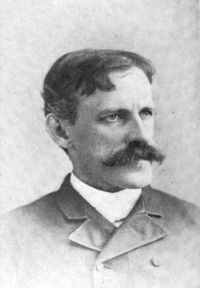
Portrait of William Elliot Griffis William Elliot Griffis The Story of New Netherland — Chapter VIII: The Rensselaerwijk Colony (1909)

Even then, the Dunkirkers could sometimes by numbers overcome four or five state ships, even men-of-war, saving themselves and their booty behind the dangerous Flemish sandbanks. Many a ship bound for America was thus caught and plundered, and its passengers were held to ransom. For sixty years this war on the waters between the Dutch sailors and the Dunkirkers continued. It was to root the pirates out of their lairs that the States-General sent Maurice, their young commander-in-chief, into the enemy's country.
Source: Wikisource

Portrait of William Elliot Griffis William Elliot Griffis The Story of New Netherland — Chapter VIII: The Rensselaerwijk Colony (1909)

VAN RENSSELAER'S colony was planted on ground that was sacred and classic in Iroquois tradition. Here was the Eastern Door of the Long House. Naturally one expects to find the gateway into the Iroquois country where two valleys and streams join, at the confluence of the Mohawk with the Hudson. Eastbound travelers in moccasin and canoe, however, made detour at Schenectady. By turning to the right into the valley of Norman's Kill, and following the stream southwardly, they avoided the shallow windings of the lower Mohawk, the sandhills of Niskayuna, and the great falls at Cohoes.
Source: Wikisource

Portrait of William Elliot Griffis William Elliot Griffis The Story of New Netherland — Chapter VIII: The Rensselaerwijk Colony (1909)

The colonists could not feel safe until they were well out on the ocean, because of the Dunkirkers, or Belgian-Spanish pirates. The admiralty, or naval station at Dunkirk, for privateers and war vessels flying the Spanish flag, had been organized by the Duke of Parma in 1583. In four years these pirates had become so dangerous that the States-General ordered that when captured no mercy be shown to either masters or men. In many a Dutch port the gallows stood ready, and the hangman began his work at once. Dutch vessels could go out only in convoy or heavily armed.
Source: Wikisource

Get perspective with Kwize: daily news enlightened by great literature