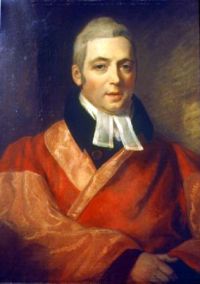
William George Maton

William George Maton

Summary

Portrait of William George Maton William George Maton Archaeologia (1800)

The immediate cause of this memorable change in the state of Stonehenge must have been the sudden and rapid thaw that began the day before the stones fell, succeeding a very deep snow. In all probability the trilithon was originally perfectly upright, but it had acquired some degree of inclination long before the time of its fall. This inclination was remarked by Dr. Stukely, though it was not so considerable, I think, as is represented in his north view of Stonehenge. One of the supporters had lost much of its original bulk in consequence of corrosion by the weather, near its foundation
Source: Wikisource

Portrait of William George Maton William George Maton Archaeologia (1800)

It fell outwards, nearly in a western direction, the impost in its fall striking against one of the stones of the outer circle, which, however, has not been thereby driven very considerably out of its perpendicularity. The lower ends of the two uprights, or supporters, being now exposed to view, we are enabled to ascertain the form into which they were hewn. They are not right-angled, but bevilled off in such a manner that the stone which stood nearest to the upper part of the adytum is 22 feet in length on one side, and not quite 20 on the other
Source: Wikisource

Portrait of William George Maton William George Maton Archaeologia (1800)

The impost alone is considerably more than 11 tons in weight. This stone, which was projected about 2 feet beyond the supporters, made an impression in the ground to the depth of seven inches, or more; it was arrested in its tendency to roll by the stone it struck whilst falling.
Source: Wikisource

Get perspective with Kwize: daily news enlightened by great literature